www.ssc.upenn.edu
403 Forbidden
topics
 Industry
- Science and Education / Universities and Colleges
- Origin
- United States
- Global rank
- #5,053
- Rank in United States
- #1,264
 United States
 Updated at

en
403 Forbidden
topics
IndustryOriginGlobal rankRank in United StatesUpdated at The higher the score, the more externally observable protections the system has recorded. This page does not certify that the website is reputable, legitimate, or completely free of vulnerabilities.

As of September 21, 2026 at 03:18, www.ssc.upenn.edu has a security score of 59/100 (grade F: “Low”). CyStack’s automated assessment recorded 14 issues to review after completing 95.9% of applicable checks. The website owner should address “Browser-trusted certificate” first, then review the remaining items in order of impact.

At assessment time, CyStack did not find www.ssc.upenn.edu or related infrastructure on any scam, phishing, or malware warning list after checking 5 online reputation sources. This result reflects external observations; it does not guarantee absolute safety or verify the organization’s legal status or reputation.
These matching email records were observed previously, but they may already have been addressed or may no longer be valid. The device count estimates infected devices associated with these email records; it is not the number of devices owned by the organization.
Frequently asked questions
A valid SSL certificate still does not prove that www.ssc.upenn.edu is safe, legitimate, or free of scam signals. For a more complete assessment, this report also checks phishing and malware, exposed email records, IPs and open ports, subdomains, technologies, and CVEs that may apply to observed versions.
HTTPS on www.ssc.upenn.edu presented a certificate that was invalid or failed verification. The operator should review its validity dates, domain names, and trust chain.
Review HTTPS and certificateData sources
CyStack compiles scan results from its internal cybersecurity monitoring systems, including CyStack VulnScan and CyStack Threat Intelligence, together with publicly available Internet data. The assessment only observes and analyzes information already available; it does not attempt unauthorized access, test passwords, send exploit code, or change or disrupt the assessed system.
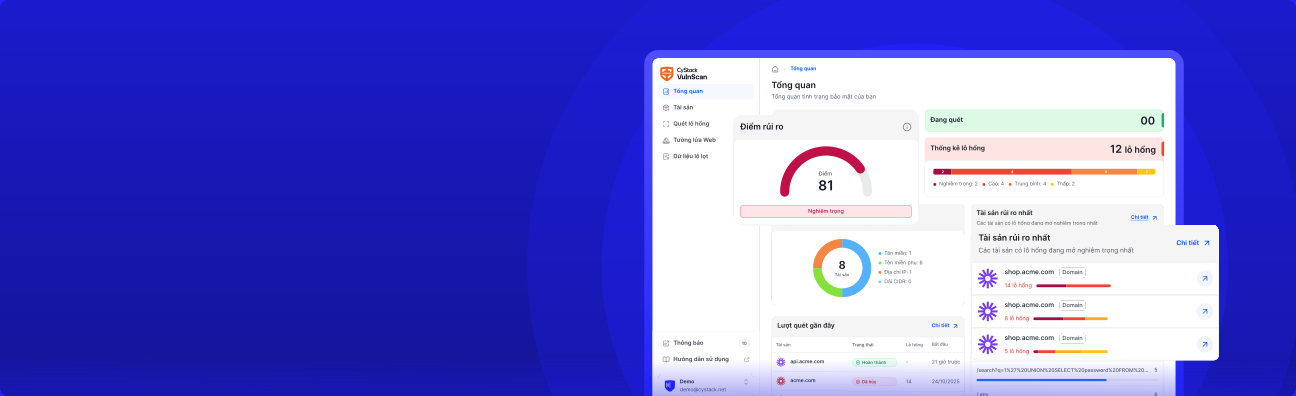
CyStack VulnScan continuously discovers assets, validates vulnerabilities, and helps security teams prioritize remediation across the enterprise.
These 3 failed checks or warnings have the greatest impact on the result for www.ssc.upenn.edu.
Why it matters
Browsers trust a website only when its certificate can be traced to a recognized certificate provider. An untrusted certificate causes warnings and prevents visitors from reliably confirming the website's identity.
What to do
Install a certificate from a provider trusted by common browsers and configure the server to send every required intermediate certificate.
Diagnostic information
The available certificate evidence was not sufficient to conclude this certificate requirement.
Evidence and check scope
At most 10 recent redacted records are shown to protect sensitive information.
Data provided by
This is a quick, point-in-time check from outside the organization. It can surface visible risks, but it does not replace penetration testing or an authenticated assessment.
Scope of this check
This check only evaluates the homepage response and content that the scanner could reach. Other pages and sign-in flows may use different settings.
Evidence and check scope
References
Diagnostic information
The available certificate evidence was not sufficient to conclude this certificate requirement.
Evidence and check scope
Recently completed assessments, prioritizing websites with a similar sector, country or security grade for easier comparison.