CWE-400 là gì?
Đang phân tích dữ liệu...
| Tác động | Phạm vi | Diễn giải |
|---|---|---|
| Từ chối dịch vụ: sập, thoát hoặc khởi động lại, Từ chối dịch vụ: tiêu thụ tài nguyên CPU, Từ chối dịch vụ: tiêu thụ bộ nhớ, Từ chối dịch vụ: tiêu thụ tài nguyên khác | Tính sẵn sàng | If an attacker can trigger the allocation of the limited resources, but the number or size of the resources is not controlled, then the most common result is denial of service. This would prevent valid users from accessing the product, and it could potentially have an impact on the surrounding environment, i.e., the product may slow down, crash due to unhandled errors, or lock out legitimate users. For example, a memory exhaustion attack against an application could slow down the application as well as its host operating system. |
| Vượt qua cơ chế bảo vệ, Khác | Kiểm soát truy cập, Khác | In some cases it may be possible to force the product to "fail open" in the event of resource exhaustion. The state of the product -- and possibly the security functionality - may then be compromised. |
| Phương pháp | Cách làm | Hiệu quả |
|---|---|---|
| Phân tích tĩnh tự động | Automated static analysis typically has limited utility in recognizing resource exhaustion problems, except for program-independent system resources such as files, sockets, and processes. For system resources, automated static analysis may be able to detect circumstances in which resources are not released after they have expired. Automated analysis of configuration files may be able to detect settings that do not specify a maximum value. Automated static analysis tools will not be appropriate for detecting exhaustion of custom resources, such as an intended security policy in which a bulletin board user is only allowed to make a limited number of posts per day. | Hạn chế |
| Phân tích động tự động | Certain automated dynamic analysis techniques may be effective in spotting resource exhaustion problems, especially with resources such as processes, memory, and connections. The technique may involve generating a large number of requests to the product within a short time frame. | Khá |
| Kiểm thử fuzzing | While fuzzing is typically geared toward finding low-level implementation bugs, it can inadvertently find resource exhaustion problems. This can occur when the fuzzer generates a large number of test cases but does not restart the targeted product in between test cases. If an individual test case produces a crash, but it does not do so reliably, then an inability to handle resource exhaustion may be the cause. | Tùy cơ hội |
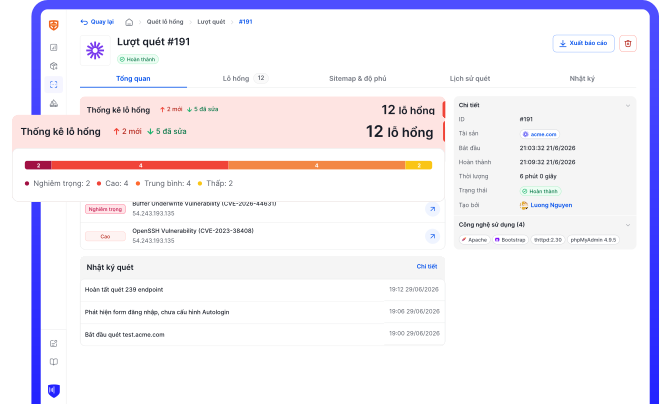
Dưới đây là các lỗ hổng tiêu biểu liên quan đến CWE-400, dựa theo mức độ ưu tiên
CWE™ Program, operated by The MITRE Corporation. Copyright © 2006–2026, The MITRE Corporation. The MITRE Corporation hereby grants you a non-exclusive, royalty-free license to use CWE for research, development, and commercial purposes. CWE Terms of Use.
Giải pháp CyStack VulnScan liên tục phát hiện tài sản, xác minh lỗ hổng và giúp đội ngũ bảo mật ưu tiên khắc phục cho toàn bộ doanh nghiệp.
Khám phá CyStack VulnScanvi