gamelade.vn có an toàn không? Đánh giá bảo mật | CyStack
gamelade.vn
GAMELADE | Kênh tin game tổng hợp và đánh giá game hàng đầu
Cập nhật tin game mới nhất, đánh giá game chuyên sâu và tin tức Esports nóng hổi mỗi ngày tại Gamelade. Đón đọc các bài viết chất lượng về thị trường game Mobile, PC và Console ngay hôm nay!
Lĩnh vực
Trò chơi / Trò chơi điện tử, Máy chơi game và Phụ kiện
Nguồn gốc
Việt Nam
Xếp hạng toàn cầu
#1.505.533
Xếp hạng tại Việt Nam
#26.501
Cập nhật lúc
C71,8/100
Mức an toàn
Khá
Độ tin cậy dữ liệu
Cao
Phạm vi đã kiểm tra
97,3%
Điểm và hạng thể hiện kết quả đã ghi nhận tại thời điểm quét. Hãy xem từng hạng mục kiểm tra và bằng chứng để hiểu đầy đủ bối cảnh.
Trang web “gamelade.vn” có an toàn không?
Báo cáo này tổng hợp các quan sát bảo mật đã ghi nhận cho gamelade.vn tại thời điểm quét. Hãy xem từng hạng mục và bằng chứng để hiểu đầy đủ bối cảnh.
Có dấu hiệu lừa đảo, phishing hoặc mã độc nào liên quan đến gamelade.vn không?
CyStack chưa ghi nhận gamelade.vn hay hạ tầng liên quan trong bất kỳ danh sách cảnh báo lừa đảo, phishing hoặc mã độc nào tại thời điểm quét, sau khi đối chiếu 5 nguồn danh tiếng trực tuyến. Kết quả này phản ánh quan sát từ bên ngoài, không đảm bảo website an toàn tuyệt đối và không xác nhận tư cách pháp lý hay uy tín của tổ chức.
Dữ liệu được tổng hợp từ các hệ thống giám sát an ninh mạng của CyStack
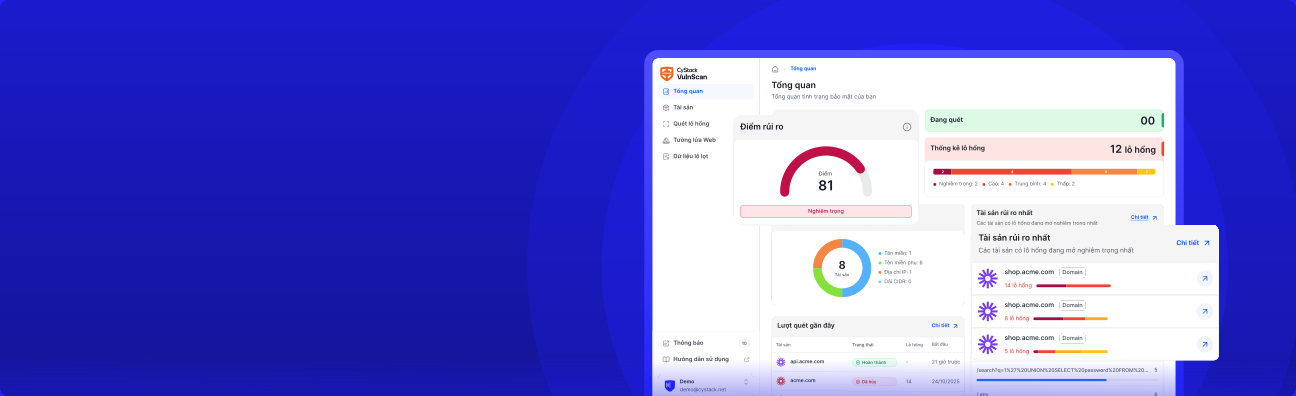
CyStack tổng hợp kết quả quét từ các hệ thống giám sát an ninh mạng nội bộ, bao gồm CyStack VulnScan và CyStack Threat Intelligence, cùng các nguồn dữ liệu công khai trên Internet. Quá trình đánh giá chỉ quan sát và phân tích thông tin sẵn có, không đăng nhập trái phép, thử mật khẩu, gửi mã khai thác hay làm thay đổi, gián đoạn hệ thống được đánh giá.
Có 3 tiêu chí không đạt hoặc cảnh báo có ảnh hưởng lớn nhất tới kết quả của gamelade.vn.
Các CVE tiềm năng đã được ghi nhận có khai thácTìm thấy 1 ứng viên đã biết bị khai thác, nhưng dấu vân tay sản phẩm bên ngoài cần được xác minh.Nghiêm trọng
Vì sao cần quan tâm
Một CVE có thể liên quan cũng nằm trong danh mục Known Exploited Vulnerabilities (KEV) của CISA, nghĩa là lỗ hổng đó đã bị dùng trong các cuộc tấn công thực tế. Kết quả cần được điều tra khẩn cấp nhưng vẫn phải xác nhận phần mềm đang cài có thực sự bị ảnh hưởng hay không.
Nên làm gì
Xác minh ngay sản phẩm đang cài và làm theo hướng dẫn của CISA cùng nhà cung cấp về biện pháp giảm thiểu, vá lỗi hoặc nâng cấp nếu sản phẩm bị ảnh hưởng.
Bằng chứng và phạm vi kiểm tra
Lỗ hổng đã ghi nhận bị khai thác:
1
Tổng ứng viên lỗ hổng đã biết bị khai thác:
1
Mã CVE có khả năng liên quan:
CVE-2023-44487, CVE-2024-31210, CVE-2024-4439, CVE-2024-6387, CVE-2025-23419, CVE-2025-26465, CVE-2025-32728, CVE-2026-35385, CVE-2026-35387, CVE-2026-35388… và 9 giá trị khác
Mã CVE có khả năng liên quan đang hiển thị:
CVE-2023-44487, CVE-2024-31210, CVE-2024-4439, CVE-2024-6387, CVE-2025-23419, CVE-2025-26465, CVE-2025-32728, CVE-2026-35385, CVE-2026-35387, CVE-2026-35388… và 9 giá trị khác
Tổng số lỗ hổng có khả năng liên quan:
19
Số lỗ hổng có khả năng liên quan đang hiển thị:
19
Đã hoàn tất đối chiếu lỗ hổng bị khai thác:
Có
Hoàn tất:
Có
Sản phẩm đã đối chiếu:
3
Sản phẩm đủ dữ liệu để đối chiếu:
3
Không hiển thị 16 trường bằng chứng bổ sung tại đây.
Mức độ công khai của dịch vụ quản trịPhát hiện dịch vụ quản trị công khai đã được xác nhận qua phản hồi dịch vụ: 160.187.38.28:22 (ssh).Cao
Vì sao cần quan tâm
Dịch vụ quản trị từ xa như RDP, VNC, Docker, Kubernetes và bảng điều khiển là mục tiêu có giá trị cao. Khi mở công khai, bất kỳ ai trên Internet cũng có thể thử mật khẩu hoặc khai thác dịch vụ chưa được vá.
Nên làm gì
Loại bỏ truy cập trực tiếp từ Internet và yêu cầu VPN, cổng truy cập được bảo vệ chặt hoặc mạng nguồn tin cậy; đồng thời bật MFA khi dịch vụ hỗ trợ.
Nguồn nội dung được phép tải (CSP)Kết quả đã ghi nhận “Nguồn nội dung được phép tải (CSP)” là không đạt tại thời điểm quét. Cần xác nhận tình trạng hiện tại trước khi xử lý.Cao
Vì sao cần quan tâm
Content Security Policy (CSP) giới hạn nguồn được phép cung cấp script, style, frame và nội dung khác cho trình duyệt. Chính sách chặt chẽ giúp giảm tác động nếu kẻ tấn công chèn được nội dung vào trang.
Nên làm gì
Chỉ khai báo các nguồn ứng dụng thực sự cần, kiểm thử chính sách trước khi kích hoạt và hạn chế quy tắc ký tự đại diện (*) quá rộng, unsafe-inline cùng unsafe-eval.
Hệ điều hành
Hạ tầng công khai và phần mềm có thể quan sát
Mỗi địa chỉ IP công khai được nhóm cùng dịch vụ đang mở, sản phẩm đã nhận diện và các CVE có khả năng liên quan đến phiên bản quan sát được.
Định danh CPEcpe:2.3:a:openbsd:openssh:9.6p1:*:*:*:*:*:*:*
Độ tin cậyCao
CVE tiềm năng của sản phẩm này
CVE-2026-60002OpenSSH 9.6p1CVSS 9,4
Sản phẩm đối chiếu: OpenSSH 9.6p1 Độ tin cậy: Cao
ssh in OpenSSH before 10.4 can have a use-after-free when a server changes its host key during a key re-exchange. (This outcome occurs only on the client side.)
A security regression (CVE-2006-5051) was discovered in OpenSSH's server (sshd). There is a race condition which can lead sshd to handle some signals in an unsafe manner. An unauthenticated, remote attacker may be able to trigger it by failing to authenticate within a set time period.
In OpenSSH before 10.3, a file downloaded by scp may be installed setuid or setgid, an outcome contrary to some users' expectations, if the download is performed as root with -O (legacy scp protocol) and without -p (preserve mode).
OpenSSH before 10.3 mishandles the authorized_keys principals option in uncommon scenarios involving a principals list in conjunction with a Certificate Authority that makes certain use of comma characters.
sshd in OpenSSH before 10.4 allows remote attackers to cause a denial of service (resource consumption from excessive authentication attempts) because MaxAuthTries was mishandled for GSSAPIAuthentication.
A vulnerability was found in OpenSSH when the VerifyHostKeyDNS option is enabled. A machine-in-the-middle attack can be performed by a malicious machine impersonating a legit server. This issue occurs due to how OpenSSH mishandles error codes in specific conditions when verifying the host key. For an attack to be considered successful, the attacker needs to manage to exhaust the client's memory resource first, turning the attack complexity high.
OpenSSH before 10.3 can use unintended ECDSA algorithms. Listing of any ECDSA algorithm in PubkeyAcceptedAlgorithms or HostbasedAcceptedAlgorithms is misinterpreted to mean all ECDSA algorithms.
sshd in OpenSSH before 10.4 has an undocumented security-relevant behavior: GSSAPIStrictAcceptorCheck has no value if the server is in Windows Active Directory.
sftp in OpenSSH before 10.4 does not properly constrain the location of downloaded files when "sftp server:/path ." is used with an attacker-controlled server.
internal-sftp in sshd in OpenSSH before 10.4 recognizes only the first 9 command-line arguments, which can be important if a later command-line argument would have helped to ensure the intended security properties of an SFTP connection.
In sshd in OpenSSH before 10.0, the DisableForwarding directive does not adhere to the documentation stating that it disables X11 and agent forwarding.
The HTTP/2 protocol allows a denial of service (server resource consumption) because request cancellation can reset many streams quickly, as exploited in the wild in August through October 2023.
When multiple server blocks are configured to share the same IP address and port, an attacker can use session resumption to bypass client certificate authentication requirements on these servers. This vulnerability arises when TLS Session Tickets https://nginx.org/en/docs/http/ngx_http_ssl_module.html#ssl_session_ticket_key are used and/or the SSL session cache https://nginx.org/en/docs/http/ngx_http_ssl_module.html#ssl_session_cache are used in the default server and the default server is performing client certificate authentication.
Note: Software versions which have reached End of Technical Support (EoTS) are not evaluated.
The HTTP/2 protocol allows a denial of service (server resource consumption) because request cancellation can reset many streams quickly, as exploited in the wild in August through October 2023.
When multiple server blocks are configured to share the same IP address and port, an attacker can use session resumption to bypass client certificate authentication requirements on these servers. This vulnerability arises when TLS Session Tickets https://nginx.org/en/docs/http/ngx_http_ssl_module.html#ssl_session_ticket_key are used and/or the SSL session cache https://nginx.org/en/docs/http/ngx_http_ssl_module.html#ssl_session_cache are used in the default server and the default server is performing client certificate authentication.
Note: Software versions which have reached End of Technical Support (EoTS) are not evaluated.
WWordPress6.4.2Blogs · CMS6.4.22 CVE có thể liên quanCVSS 8,8
Định danh CPEcpe:2.3:a:wordpress:wordpress:6.4.2:*:*:*:*:*:*:*
Độ tin cậyTrung bình
WordPress is a free and open-source content management system written in PHP and paired with a MySQL or MariaDB database. Features include a plugin architecture and a template system.
Sản phẩm đối chiếu: wordpress 6.4.2 Độ tin cậy: Cao
WordPress is an open publishing platform for the Web. It's possible for a file of a type other than a zip file to be submitted as a new plugin by an administrative user on the Plugins -> Add New -> Upload Plugin screen in WordPress. If FTP credentials are requested for installation (in order to move the file into place outside of the `uploads` directory) then the uploaded file remains temporary available in the Media Library despite it not being allowed. If the `DISALLOW_FILE_EDIT` constant is set to `true` on the site _and_ FTP credentials are required when uploading a new theme or plugin, then this technically allows an RCE when the user would otherwise have no means of executing arbitrary PHP code. This issue _only_ affects Administrator level users on single site installations, and Super Admin level users on Multisite installations where it's otherwise expected that the user does not have permission to upload or execute arbitrary PHP code. Lower level users are not affected. Sites where the `DISALLOW_FILE_MODS` constant is set to `true` are not affected. Sites where an administrative user either does not need to enter FTP credentials or they have access to the valid FTP credentials, are not affected. The issue was fixed in WordPress 6.4.3 on January 30, 2024 and backported to versions 6.3.3, 6.2.4, 6.1.5, 6.0.7, 5.9.9, 5.8.9, 5.7.11, 5.6.13, 5.5.14, 5.4.15, 5.3.17, 5.2.20, 5.1.18, 5.0.21, 4.9.25, 2.8.24, 4.7.28, 4.6.28, 4.5.31, 4.4.32, 4.3.33, 4.2.37, and 4.1.40. A workaround is available. If the `DISALLOW_FILE_MODS` constant is defined as `true` then it will not be possible for any user to upload a plugin and therefore this issue will not be exploitable.
Sản phẩm đối chiếu: wordpress 6.4.2 Độ tin cậy: Cao
WordPress Core is vulnerable to Stored Cross-Site Scripting via user display names in the Avatar block in various versions up to 6.5.2 due to insufficient output escaping on the display name. This makes it possible for authenticated attackers, with contributor-level access and above, to inject arbitrary web scripts in pages that will execute whenever a user accesses an injected page. In addition, it also makes it possible for unauthenticated attackers to inject arbitrary web scripts in pages that have the comment block present and display the comment author's avatar.
JjQueryChưa thấy phiên bảnJavaScript LibrariesChưa thấy phiên bản
Định danh CPEcpe:2.3:a:jquery:jquery:*:*:*:*:*:*:*:*
Độ tin cậyTrung bình
jQuery is a JavaScript library which is a free, open-source software designed to simplify HTML DOM tree traversal and manipulation, as well as event handling, CSS animation, and Ajax.
JjQuery MigrateChưa thấy phiên bảnJavaScript LibrariesChưa thấy phiên bản
Độ tin cậyTrung bình
Query Migrate is a javascript library that allows you to preserve the compatibility of your jQuery code developed for versions of jQuery older than 1.9.
CContact Form 71.22.0Wordpress Plugin · Form Builders · WordPress Plugins1.22.0
Định danh CPEcpe:2.3:a:contactform7:contact_form_7:*:*:*:*:*:wordpress:*:*
Độ tin cậyCao
Contact Form 7 is an WordPress plugin which can manage multiple contact forms. The form supports Ajax-powered submitting, CAPTCHA, Akismet spam filtering.


 Lĩnh vực
 Việt Nam
 Cập nhật lúc